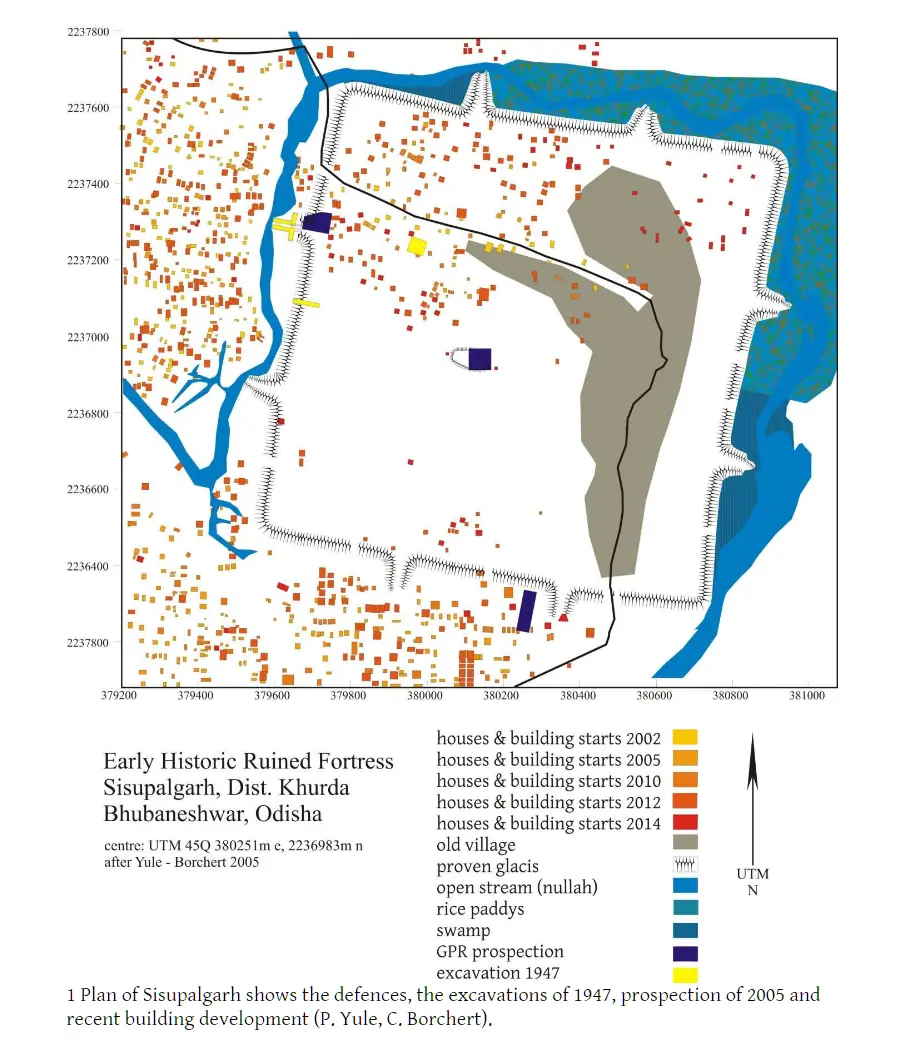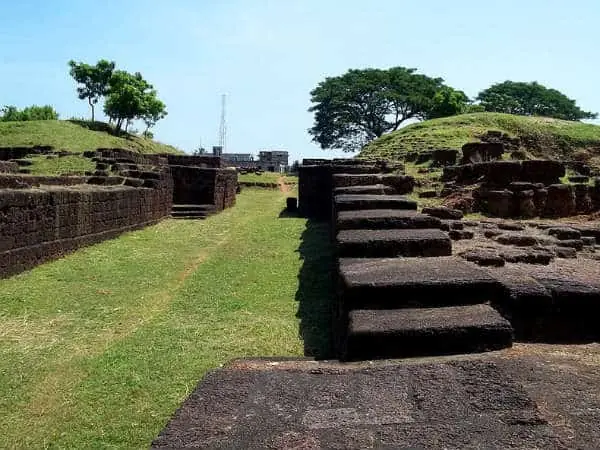
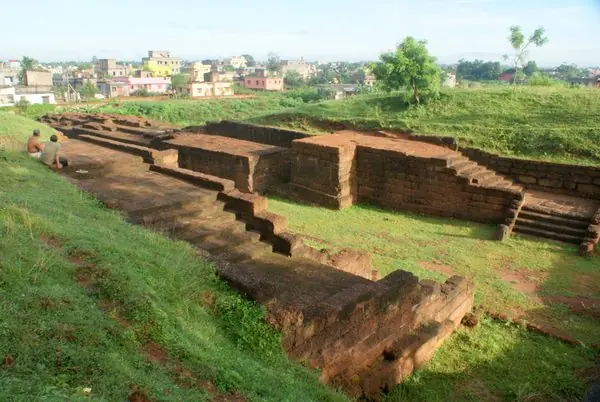
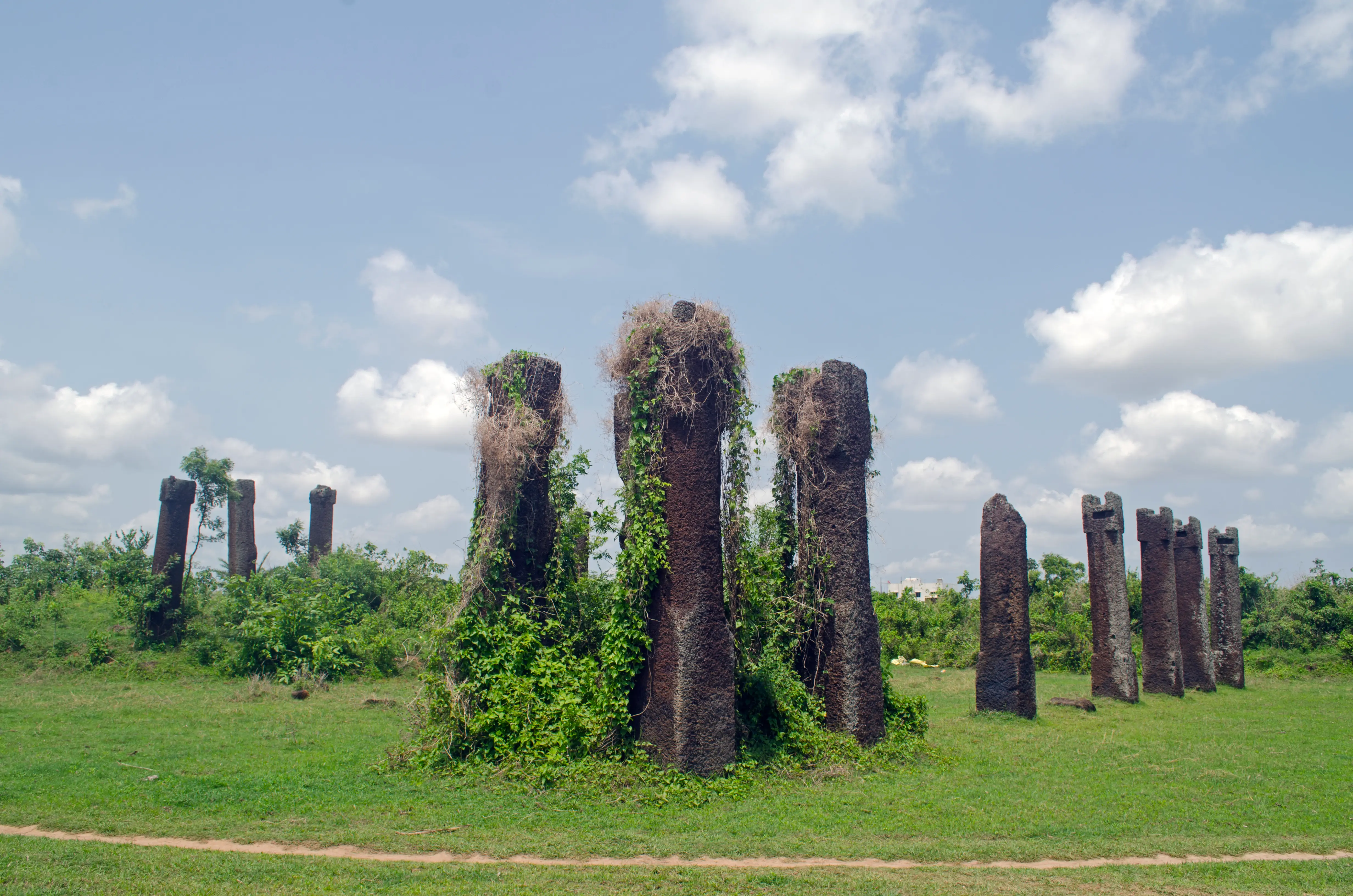
- early historic period - as old as, if not more, Kalinga war of 3rd century BCE
- is it just the natural course of the world? maybe there was a settlement before Sisupalgarh who were encroached on by this great city of Kalinga, probably some builder sold the occupied land for a quick buck
- the people who own it now how do they even own it? how does ownership come? how does someone own a piece of land? how ancestral are their claims of it?
- how does this transition occur? from a great monument to a deserted land?
- how do cities fall?
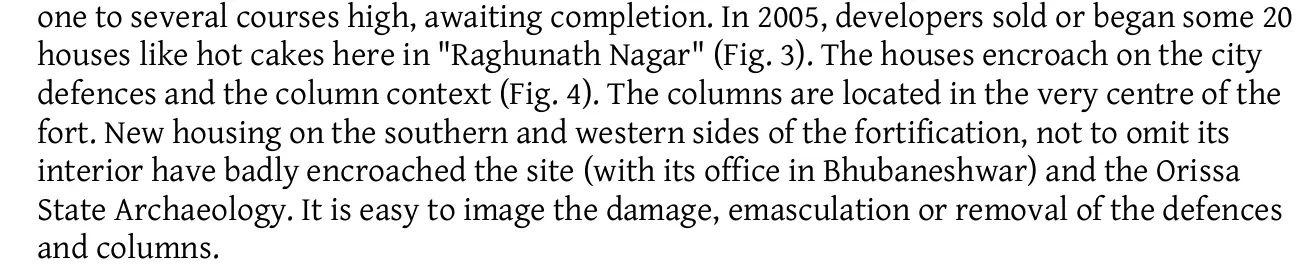
Clipping from Paul Yule’s Article on the emasculation of the site
UCLA 2002 EXPEDITIONS - Smith et. al.
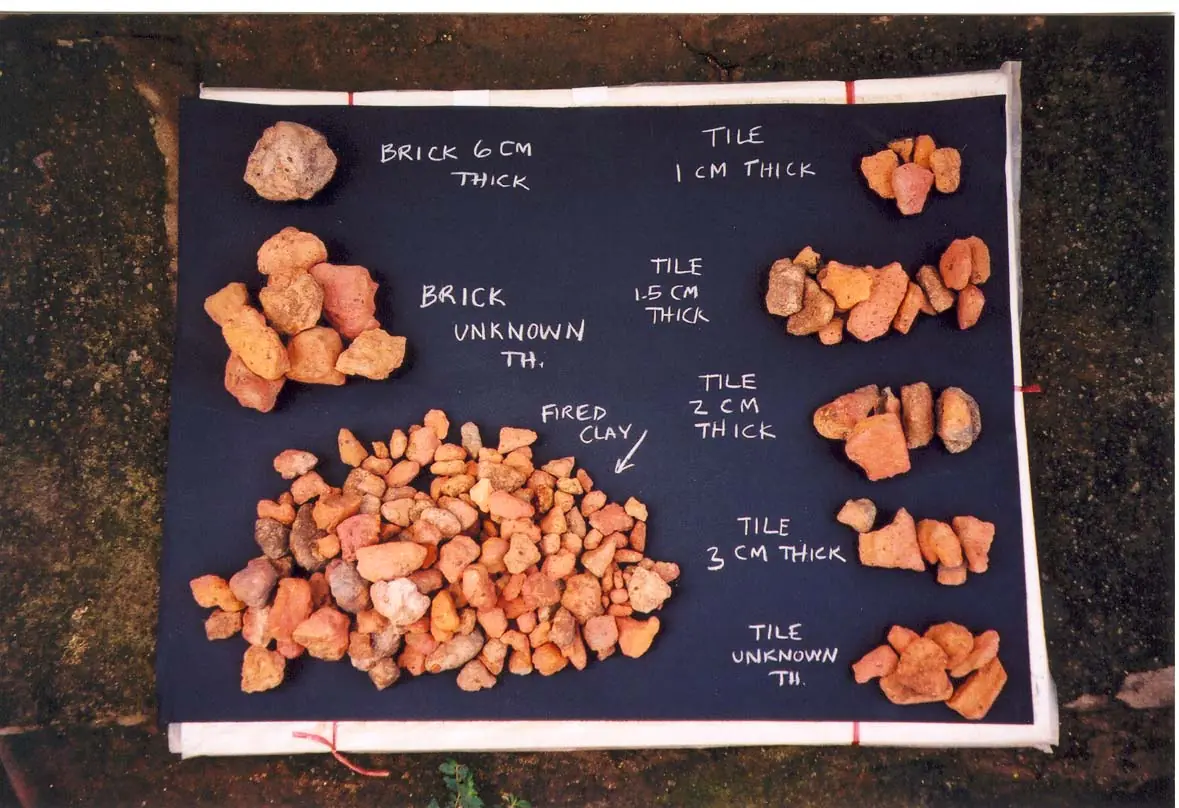
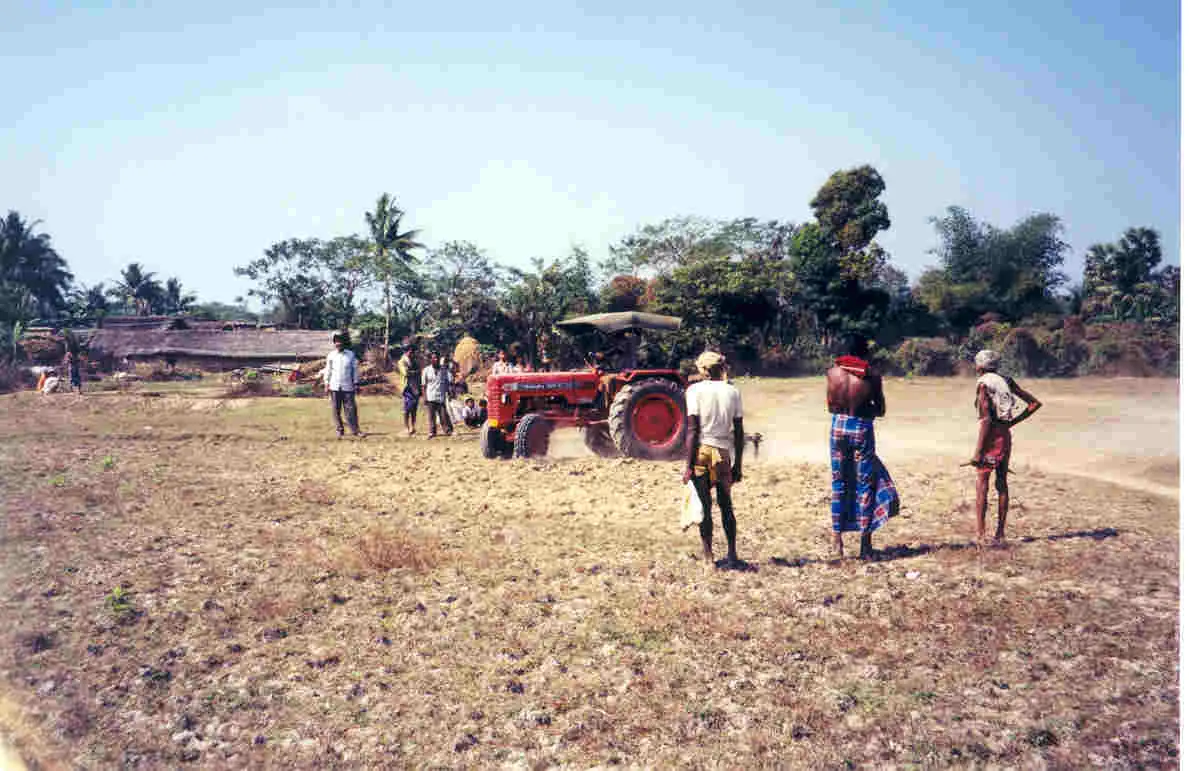
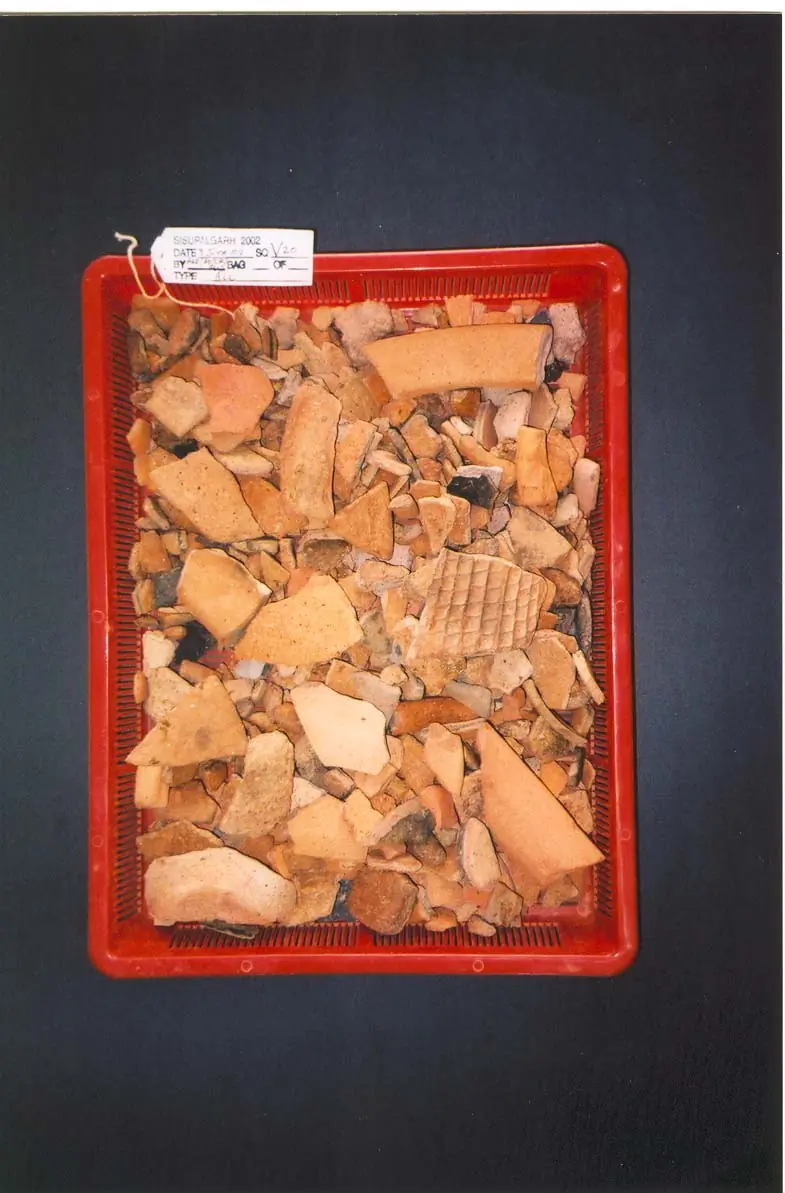
UCLA expedition journals
2 February 2003
In any archaeological project, there are moments when we find ourselves contemplating how to integrate our research objectives with the opportunities and constraints of the local field situation. Thus far in our two years of work here, we have been able to implement our collection activities at times that are also convenient to farmers, as they plow their fields and make the surface available for collection of ancient materials as well. This has resulted in good visibility throughout the interior of the ramparts of this impressive ancient site, with one important exception: a portion of the southeast interior corner where there has been no plowing activity for several years due to lack of irrigation water. Even the monsoon, normally copious in providing water, has not been sufficient for cultivation in this area, and it has lain fallow in all of the time that we have been at the site. I therefore considered whether to ask farmers if we could plow a portion of their fields to enable collection to take place. The local landowners graciously agreed, and yesterday we started a collection program with the aid of a tractor that plowed small zones of adjacent fields to enable collections to take place.

9 February 2003
We continue our collection program of last week, hiring a tractor each morning to plow enough ground for that day’s collection. This is probably the first archaeological project in quite a while to hire a tractor! We continue to be very grateful for the local landowners’ indulgence of what must seem a very strange practice indeed, but the collections in this area provide a valuable missing link to be compared with the surface collections elsewhere in the site. We’ve been working long days in the field to enable the collections to be completed, so we take a lunch break and sit on the rampart under a tree watching the local wildlife and the calm pace of village life. Since the World Cup of cricket[Fig 1] is nearly underway, we also get a preview in the form of intense cricket games by local kids. Unlike American baseball bats, cricket bats bear considerable marks of ownership and decoration, with lots of stickers and hand-painted proclamations. In the early mornings our fieldwork generates some interest amongst the little kids who are too young to play, but by the time the cricket bats come out our appeal fades considerably in favor of the real local entertainment.
Fig 1

Fig 2
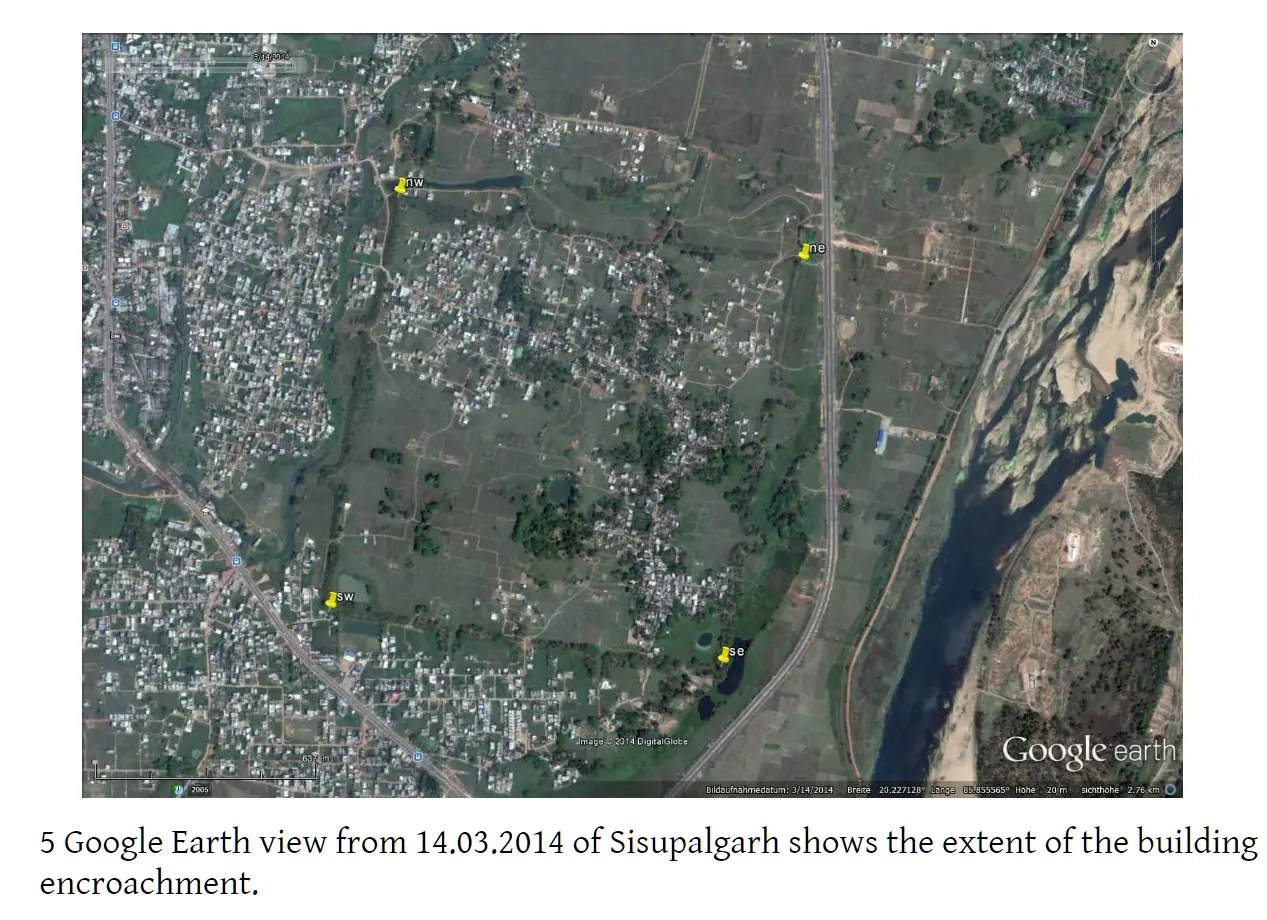
Current state of Sisuplagarh, heavy encroachment Screenshots taken from Google Earth on 30-04-202
Fig 3
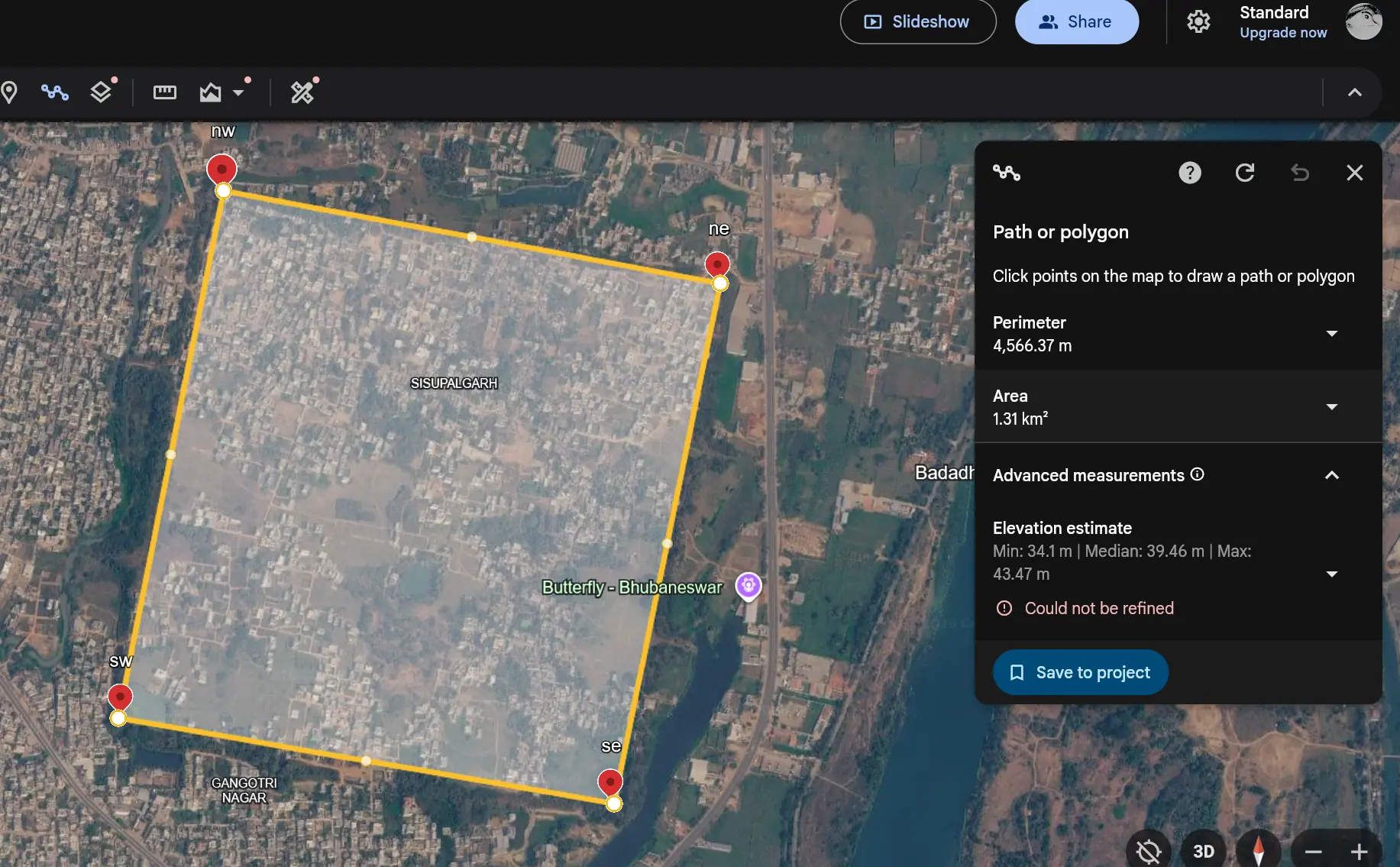
Area is of 130 hectares, can be confirmed through Google Earth
Fig 4
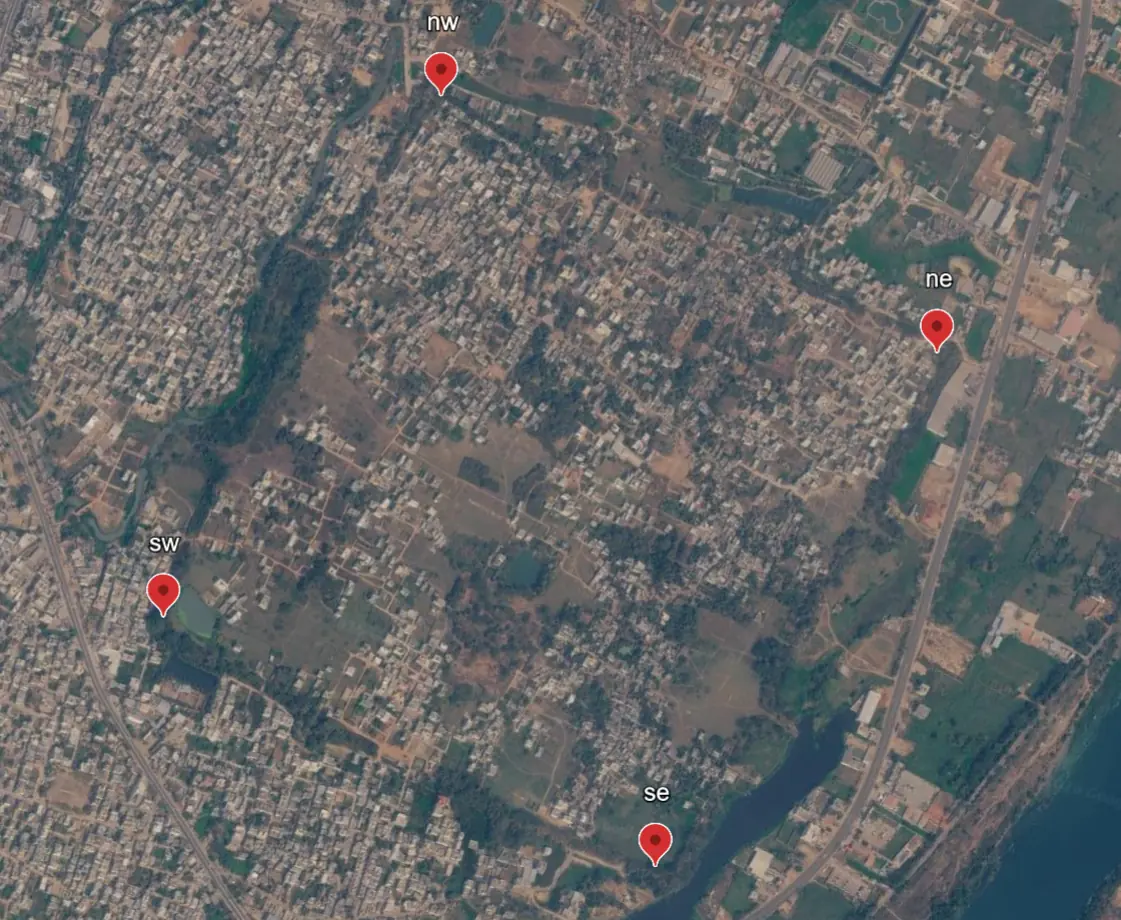
Irreversible Damage
The encroachment kept on going, it could have been stopped when it started in the late to early 2010s, but the neglect and lack of care from the administration has made this problem even harder to tackle
Fig 5